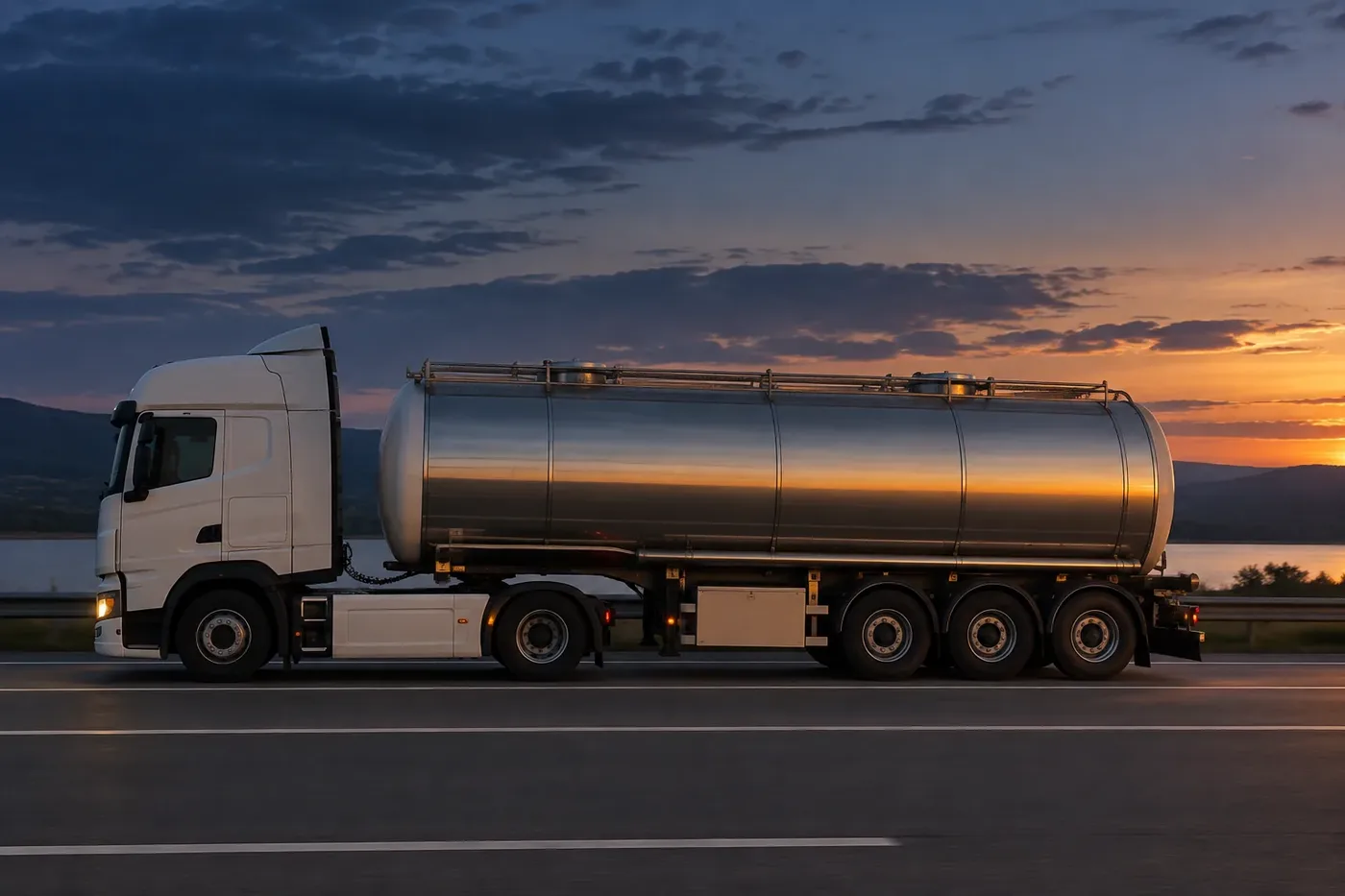
Tank Vehicles Practice Test
Take the timed practice quiz →
The N (Tank Vehicle) endorsement is required to operate vehicles that transport liquids or liquefied gases in a tank or tanks individually rated at 119 gallons or more, with combined rated capacity of 1,000 gallons or more. The test covers the unique handling characteristics of tankers — high center of gravity, surge, baffles versus smooth-bore, outage, and the loading and unloading procedures for both food-grade and industrial liquids. Drivers carrying hazardous liquids will also need the H endorsement, and the X endorsement combines both.
How to use this practice bank
Read each question carefully before checking the answer. Most CDL questions are not designed to trick you, but they do test whether you know the specific rule — not just what feels safe. After reading the explanation, try to restate the rule in your own words; if you can, you've internalized it. If you can't, look up the corresponding chapter of your state's CDL handbook before moving on.
Pass scores vary slightly by state, but most jurisdictions require at least 80% correct on each knowledge exam. With 30 questions in this bank you have substantially more practice material than any single sitting of the real exam, which typically contains 20 to 50 questions per endorsement.
All 30 questions in this bank
- #1Tank vehicles are difficult to handle because:
- #2Liquid surge happens when:
- #3Smooth-bore tanks have:
- #4Baffles in a tanker:
- #5Outage refers to:
- #6A 'wet line' on a cargo tank is:
- #7When loading a tank with multiple compartments, you should:
- #8A liquid tanker driver should slow down before entering curves:
- #9The biggest reason tanker rollovers happen is:
- #10After a delivery, you should always:
- #11Tank vehicles in motion must always have:
- #12Driving a tanker on a slippery road requires:
- #13Inspection of a tanker should include:
- #14The amount of liquid you can load into a tank depends on:
- #15Why must tank vehicles take curves at slower speeds?
- #16The N (Tank Vehicle) endorsement is required when:
- #17When braking with a partially loaded smooth-bore tanker, you should:
- #18When tankers carry hazmat, drivers must follow:
- #19A tank vehicle's parking brakes should always be:
- #20The cab control valves on a tanker permit the driver to:
- #21Sloshing of liquid in tankers can:
- #22When inspecting a tanker before driving, the driver must check:
- #23The proper way to take an off-ramp in a tanker is to:
- #24Bulkheads in a tank:
- #25A driver must report any tanker leak immediately if:
- #26Vapor-recovery equipment is used:
- #27When parking a tank vehicle, drivers should:
- #28When a tanker driver feels surge during a stop, the driver should:
- #29When loading flammable liquids into a tanker, drivers must:
- #30Tankers carrying liquid food products often have:
About the Tank Vehicles exam
The Tank Vehicles knowledge test is a multiple-choice exam administered at every state CDL testing site. The questions on this page are seeded from the AAMVA Commercial Driver License Manual — the same source that state agencies use when writing their official questions — and from the corresponding sections of Title 49 of the Code of Federal Regulations. Real test questions are randomly selected from a much larger pool, so practice covers the rules and concepts rather than the wording of any one item.
The most efficient way to study is to work through this bank twice. The first pass identifies the rules you do not yet know; the second pass confirms recall. Drivers who have studied for years rarely miss a question, but newcomers should expect to need a week or more of repeated reading and quizzing before sitting the real exam. Combine this site with your state's printed CDL handbook for the most complete preparation.
Recommended study materials
Genuinely useful books for this exam, available on Amazon.